
情圣
伊犁四季旅行全攻略:从塞外江南到草原花海,详解行程交通住宿美食与特色体验建议指南_我的网站

A | 伊犁四季旅行全攻略:从塞外江南到草原花海,详解行程交通住宿美食与特色体验建议指南 为什么是伊犁 伊犁河谷三面环山,天山雪水汇成蜿蜒的伊犁河,滋养出丰饶的绿洲与牧场。

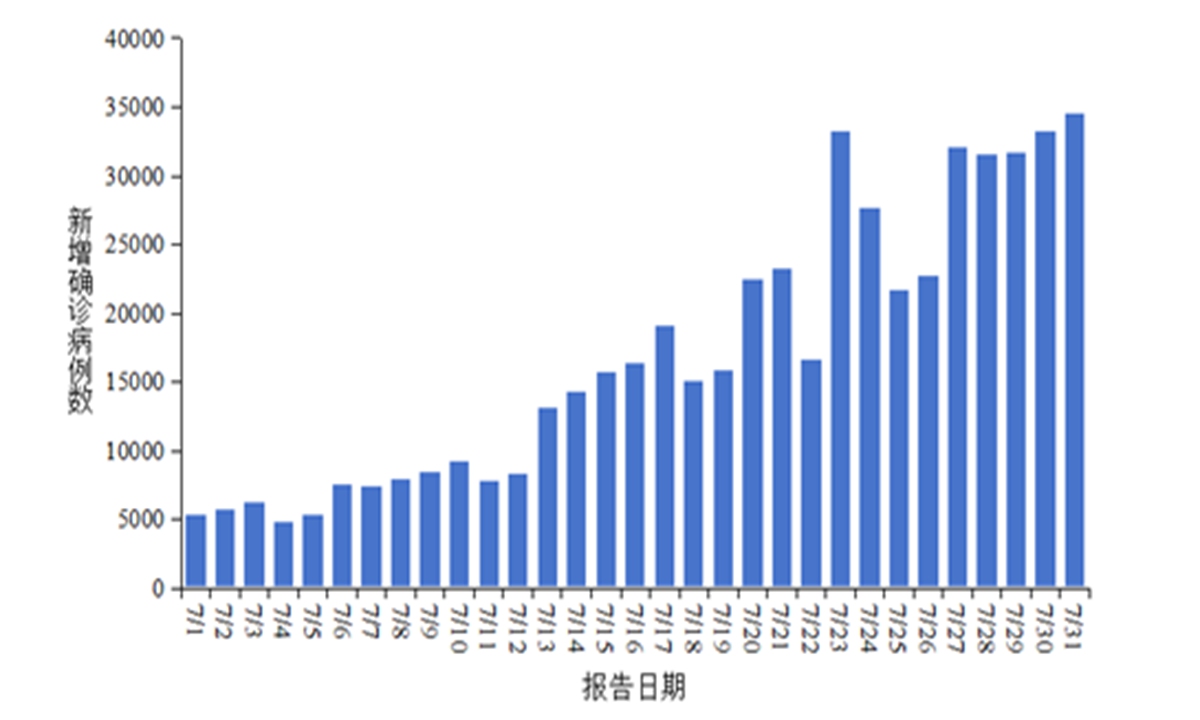
China reported 522,000 newly confirmed COVID-19 cases in July, including 487 severe cases and one related death with cases showing a fluctuating upward trend, China's national disease control authority said.
The current uptick in infections represents another regular cyclical wave, with its severity comparable to surges seen in the past two years. The upward growth curve has slowed markedly, and the country is now on the plateau phase of this epidemic peak, said the Chinese Center for Disease Control and Prevention (Chinese CDC) on Thursday.
All tested infection samples were confirmed to be the Omicron variant, with the NB.1.8.1 strain and its sublineages accounting for the majority of circulating cases, the Chinese CDC said.
A Beijing-based respiratory disease specialist told the Global Times that waning population immunity, continued virus mutations that weaken existing antibody protection, and increased summer travel have contributed to the recent modest rise in infections. However, there is no evidence that the virus has become more pathogenic. Nationwide infections appear to be nearing their peak and case numbers may begin falling in late August.
According to sentinel hospital surveillance data, from June 29-July 5 to July 27-August 2, the proportion of influenza-like illness among all outpatient and emergency visits at China's 1,041 COVID-19 and influenza sentinel hospitals edged up with slight fluctuations, standing at 4.3 percent, 4.4 percent, 4.5 percent, 4.4 percent and 4.5 percent, respectively.
During the same period, the COVID-19 positivity rate among patients with influenza-like illness in outpatient and emergency departments rose for consecutive weeks.
Several factors drove the fluctuating rise in COVID-19 cases in July. Population immunity has waned, as more than six months have passed since the last major wave of infections for most people, while continued SARS-CoV-2 mutations have reduced the protection provided by existing antibodies, Li Tongzeng, a respiratory disease medic from Beijing You An Hospital to the Capital Medical University, told the Global Times on Friday.
These factors, combined with increased travel and population mobility during the summer vacation, contributed to the recent small-scale surge. Based on patterns observed in recent years, COVID-19 infections tend to rise every six to eight months as population immunity declines, said Li.
The expert noted that while the virus continues to mutate, there is no evidence that it has become more pathogenic. Clinical data show that most patients develop only mild symptoms, with very few progressing to pneumonia or requiring hospitalization.
The Chinese CDC noted on Thursday that since COVID-19 was reclassified as a Category B infectious disease under Category B management, it has evolved into a prevalent, recurring respiratory infectious disease in China, with one to two epidemic fluctuations occurring nationwide each year.
Li also noted that residual immunity from previous infections also helps reduce disease severity, with most reinfections presenting as mild upper respiratory symptoms that resolve within about a week. The single COVID-related death reported nationwide in July further indicates that the current fatality rate remains very low.
Judging from historical epidemic patterns and current case growth trajectories, national infection figures may begin to decline in late August. Nationwide case numbers are now nearly at their peak, with declines already observed in some regions, said Li.
The Chinese CDC also said on Thursday that surveillance had not detected any variants posing major public health risks, nor had the current wave caused notable disruptions to the healthcare system.
The public is advised to take appropriate protective measures, including wearing masks when necessary, maintaining good personal hygiene, adopting healthy lifestyles and getting vaccinated as recommended.
。春季杏花如烟,夏季草原如毯,秋季白桦金黄,冬季雪岭如境。一年四季各有风景,适合放慢脚步,把时间留给旷野与村庄。

B | 这里不是一日观光的打卡地,而是一场需要沉浸其中的旅行。 行程设计思路 建议以“河谷—草原—湖泊—村落”为线索,设计一条环线,避免走回头路。常规玩法以伊宁市为起点,向北深入果子沟与赛里木湖,再向东转入喀拉峻、琼库什台,随后抵达那拉提与唐布拉,最后经独库公路或原路返回。每日行车控制在四小时以内,留出足够时间下车徒步、发呆、野餐。 一条适合多数人的十天路线参考: 伊宁市周边:逛老城街巷,沿伊犁河看日落。 前往赛里木湖:环湖一周,宿于湖畔毡房。 穿越果子沟大桥,落脚霍城薰衣草田附近。 进入喀拉峻草原:徒步猎鹰台,看立体起伏的草坡。 沿山间小路到琼库什台:体验木屋与溪谷的安静。 前往特克斯八卦城周边,登高俯瞰田原。 抵达那拉提草原:选择空中草原或河谷森林路线。 沿唐布拉百里画廊行进,欣赏天山雪峰与云杉。

C | 若独库公路通车,可翻越雪山返回,体验四季变化。 最后一天回到伊宁市,采购干果与熏肉,结束行程。 交通方式与路况 伊犁的风景多在公路两侧,自驾或包车是主流方式。出发前确认车辆状况,尤其刹车和轮胎。夏季早晚温差大,山区可能降雨,弯路多,减速慢行。也可以利用长途班车往返县市,但偏远村庄接驳不便,更适合搭配骑行或徒步。独库公路通常在六月中旬至十月初通行,行前留意当地公告。如果选择包车,提前沟通固定线路与停靠点位,尽量选择有正规运营资质的车辆。 住宿怎么选 住宿体验本身就是伊犁旅行的一部分。可以住进草原上的毡房,听夜里风雨敲打篷布;也可以留宿在哈萨克牧民的木屋,早晨被牛羊的铃铛叫醒;还可以选择县城里的普通旅舍,方便补给与休整。草原住宿条件简单,公共卫生设施齐全即可,不必追求豪华。若想拍星空,建议选择远离城镇灯光的开阔营地;若想体验烟火气,不妨住在村落中,傍晚和当地人一起坐在院子里喝奶茶。 伊犁味道 伊犁美食融合了游牧与农耕风情。大盘鸡分量十足,皮带面浸透汤汁最是过瘾。手抓肉只用清水炖煮,蘸一点皮牙子(洋葱)与盐,肉香纯粹。

D | 马肠子是寒冷季节的温暖慰藉,切片后配蒜泥和醋,油润不腻。街边卖的面肺子和米肠子适合尝鲜。奶制品爱好者可以试试酸驼奶、奶皮子和新鲜酸奶,酸冽开胃。别忘了在巴扎里买一个刚出炉的馕,趁热撕开,麦香扑鼻。

E | 伊犁的苹果与葡萄汁水丰盈,当作路上水果再合适不过。 不可错过的特色活动 除了看风景,伊犁更值得参与那些与土地相处的方式。

F | 在喀拉峻草原骑一匹马,沿着缓坡走到高处眺望雪山与河谷。 六月至七月间,在日落后的草原上听阿肯弹唱,感受冬不拉的旋律。

G | 去牧民家中参与一次挤奶或赶羊,了解转场生活的日常。 夏天在特克斯河边露营,用河水冰镇西瓜,夜观银河。 秋天帮助农家收苹果,体验树上现摘现吃的脆甜。

H | 实用贴士 伊犁昼夜温差显著,即使盛夏也要备好抓绒衣和防风外套。

I | 日照强烈,宽檐帽与防晒霜不能少。山区天气多变,雨具随身携带。

J | 在草原上徒步时,留意脚下鼠洞和石块,避免快速奔跑。进入牧民院子前先打招呼,拍照前征得同意。垃圾一律带出风景地,保持牧场清澈。尊重当地人的生活习惯,不随意攀爬围栏或追赶牲畜。到达海拔较高处时,慢慢走动适应,多喝水不减衣物。

K | 如果是夏季出行,注意防蚊虫,傍晚穿长袖长裤。 伊犁的旅行没有固定模板,方向比距离重要,停留比赶路珍贵。带上好奇心与平常心,把行程交给河谷的风和草场的路,自然会遇见属于你的那一片天空。 返回,查看更多。
Current article:http://sddif.chongtunkuaitaogacuiliamanzu.cfd/news/20260826_705048.html
Published on:10:32:07


